

Exercise bands: How to use them for shoulder rehabilitation, injury prevention and mobility
Shoulder injuries are relatively common, especially among athletes or those that do regular overhead movements.

Shoulder workouts can strengthen the shoulder muscles and increase mobility, and can be very helpful in the rehabilitation of the shoulder following an injury.
Resistance bands are a versatile, simple and affordable piece of equipment with a myriad of uses.
The use of exercise bands can be very helpful in increasing the mobility of the shoulders, rehabilitation, and injury prevention.
Here are some of the benefits of resistance band shoulder exercises:
Shoulder rehabilitation
Following a shoulder injury, much of the focus of rehabilitation is on increasing mobility, reducing pain and strengthening the shoulder.
Resistance bands can be very useful in building muscle and rehabilitating the injured shoulder.
Depending on the location and nature of your injury, you can utilise specific exercises to increase stability where needed, such as the rear deltoids or rotator cuff, as well as strengthening your biceps, triceps and back muscles to support your movements.
You can start with a lighter band and increase the tension of the band as you build up strength and your pain reduces.
Injury prevention
Resistance band exercises can help correct muscle imbalances to ensure you don't overwork certain muscles in the area.
Resistance band exercises are fantastic for building muscle, which will help prevent injury and reinjury.
Regularly exercising your shoulders can ensure your shoulder muscles and joints remain healthy and functional.
Common shoulder injuries include:
- Bursitis
- Shoulder Impingement
- Frozen shoulder
- Rotator cuff tears
Resistance band workouts can be integrated into your exercise regime to prevent injury as well as increase your overall fitness.
The use of exercise bands can build up your strength and pave the way to weighted exercises such as an overhead press.
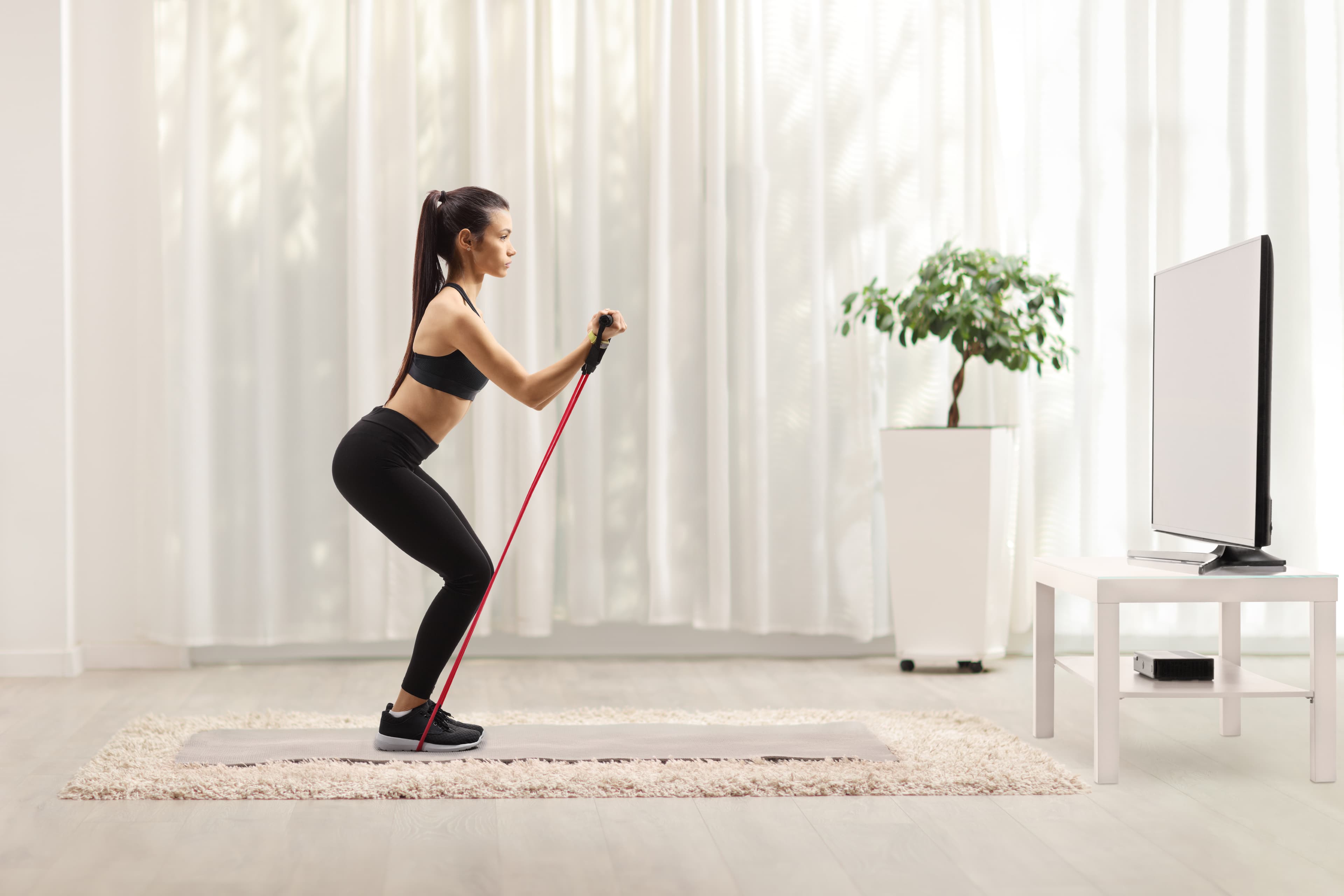
Resistance band shoulder exercises
Try these exercises for a resistance band shoulder workout:
Pull-apart
This exercise can help correct poor posture while improving the stability of the rear shoulders and upper back. This will help strengthen your muscles for when you perform overhead exercises or movements.
- Hold the exercise band with both hands out straight in front of you at shoulder height. The more band between your two hands, the less resistance and easier the exercise.
- Keep your back straight and allow your elbows to bend. Pull the band towards your chest with both hands, so that your shoulder blades come together.
- Hold the position as you feel your shoulders engaged. Slowly release back to the starting position.
Front raise
- This exercise is great for warming up the shoulders. It focuses on the front and side deltoids and also strengthens the biceps.
- Stand on the middle of your band with legs knee width apart, and cross the band in front of your legs, holding an end of the band in each hand.
- Keep your back straight as you slowly raise the bands together in front of you to shoulder height. Ensure you move your arms in sync. Control the release back down until your hands return to your thighs.
- Make the exercise more challenging by increasing the tension, and stand on more of the band or raise your arms up higher.
Reverse fly
The reverse fly works to strengthen your upper back, upper arms and shoulders.
It's a great exercise for people that are often seated and helps with correct posture.
- Similar to the front raise exercise, stand on your band with equal measures of the band on either side. Cross the band in front of your legs and hold an end in each hand.
- With a slight bend in your knees, bend forward, ensuring you maintain a long and neutral spine.
- Pull the bands up and outwards until your hands reach chest height.
- Hold with your shoulder blades pulled together for a few seconds, and control the release back down.
Lateral raise
- A lateral raise targets your upper back and core muscles as well as your shoulders.
- As with the reverse fly and front raise, stand in the middle of your band and cross the band so you hold opposite ends in your hands.
- Stand up straight. Raise your arms to the sides until you reach shoulder level, keeping a slight bend in your elbows.
- Hold the position and control the release. Stand on more of the band to increase tension.
External rotation
If you spend a lot of time at a desk or you feel stiff, the external rotation is great for increasing mobility.
- Secure one end of the resistance band to an object around waist height.
- With your feet shoulder-width apart at 90 degrees from the band, hold the other end of the band with your outside arm.
- Keep your elbow in at your waist and rotate your forearm outwards.
Take it easy when you try these exercises if you're experiencing poor mobility or sore shoulder muscles and joints.
If you need to lower the tension of the workout, use a lighter band. If you experience worsening pain while completing these exercises, stop.

Physiotherapy for shoulder pain
These general resistance band shoulder exercises can be useful in strengthening the muscles in your shoulders, increasing mobility and preventing injury.
If you experience any pain when completing these exercises, or if your shoulder pain gets worse, make sure you get checked out by a physiotherapist.
If you're suffering from shoulder pain, a physio will assess you and be able to see what is causing your pain, ensure you are using the correct form to prevent further injury, and give you specific exercises to help reduce your pain and treat your injury.
Shoulder pain is relatively common, but you don't have to live with it.
Here at APM, we want you to feel comfortable and pain-free in your body.
If you're suffering from shoulder pain or injury, our highly experienced team of physiotherapists can offer you a personalised treatment plan to help you on your road to recovery.
Get in touch with us today.
If you’re keen to develop and implement strategies to assist with your pain management, contact your local APM health professional.
You can book an appointment with an APM Physiotherapist online or in your local area by calling 0800 967 522.